Ductwork is the hidden infrastructure of your HVAC system. If your ducts are leaking, undersized, or clogged, your entire system performs below potential — you feel drafts in some rooms while utility bills climb. Spencer Heating and Air tests, designs, seals, and insulates ductwork to improve system performance, comfort consistency, and efficiency. Families throughout Jackson’s Gap and the Lake Martin area benefit from better duct design and maintenance.

Whether you're installing new equipment and want properly designed ducts, concerned about uncomfortable room temperatures, or noticing high energy bills, ductwork assessment is the first step. We can test your ducts for leaks, check for balance and design problems, and recommend solutions. Call us for a free ductwork evaluation or to discuss a complete redesign if you're upgrading your HVAC equipment.
256-373-3165Six reasons why ductwork problems undermine your HVAC system's performance and waste energy. Click any card to read the detail.
Leaky ducts lose a portion of the air your HVAC system produces before it ever reaches the room you're trying to condition.
That wasted air heats or cools your attic, basement, or crawlspace instead of your living areas. Your system has to run longer and work harder to compensate, wasting energy and raising utility bills. Sealing ducts is often the single best ROI improvement a homeowner can make—energy savings typically exceed the cost of repair within 2–3 years.
Rooms at the far end of ductwork from the unit often stay uncomfortable because air pressure drops along the ducts.
Rooms near the unit may over-cool or over-heat. Poorly designed ductwork doesn't deliver balanced airflow—some areas get too much air, others too little. A properly designed ductwork system sizes each branch to deliver equal air volume to each room, eliminating hot and cold spots.
Ducts that are too small for the air volume your system produces create backpressure.
The blower has to work harder, increasing runtime and energy use. The system can't deliver full cooling or heating capacity because air can't flow freely. Undersized ducts are often the result of hasty design or installation without proper load calculations. Proper ductwork sizing is based on the heating/cooling capacity you're installing.
If ducts accumulate dust, pollen, mold spores, or debris, your HVAC system spreads those contaminants into every room multiple times daily.
Sealing leaky ducts and joints stops dust, pollen, and contaminants from being pulled into your system in the first place. Ductwork testing can reveal where unconditioned air and contaminants are getting in.
Ducts should be securely supported and properly connected at every joint.
Disconnections, sagging ducts, or separation at connections cause air to leak into unintended spaces. Ducts also flex and move over time, causing joints to separate. Proper support and sealing prevent these issues and maintain system integrity.
Tap a symptom to see why it matters and what we can do to help.
Some rooms stay uncomfortable while others over-cool or over-heat. This indicates unbalanced airflow—poorly designed ducts, blocked vents, or leaks that prevent proper air distribution. Rooms at the end of ductwork runs often receive insufficient airflow.
What we do: measure airflow in each room, test for leaks, and balance the system to deliver proportional air volume to each area based on room size and cooling/heating needs.
Solution
Ductwork Balancing
Test airflow, seal leaks, adjust dampers for equal distribution.
If your HVAC system is well-maintained but utility bills keep climbing, ductwork leaks are likely wasting 20–30% of your conditioned air. Leaky ducts force your system to run longer to maintain temperature.
What we do: conduct pressure testing to quantify total air leakage, then seal all accessible leaks using mastic sealant or metal-backed tape. Energy savings typically recover repair costs within 2–3 years.
Solution
Duct Sealing
Professional testing and sealing reduces energy waste by 10–20%.
Low air velocity from supply vents indicates undersized ducts, blockages, or restrictions. Undersized ductwork creates backpressure that forces your blower to work harder while delivering less air to rooms.
What we do: measure static pressure and airflow velocity, identify restrictions or undersized sections, and recommend duct modifications or resizing to restore proper airflow.
Solution
Airflow Optimization
Test pressures, clear blockages, resize ducts if needed.
Whistling, rattling, or banging sounds from ducts indicate loose connections, undersized ducts causing high air velocity, or improperly supported ductwork that vibrates during operation.
What we do: inspect all ductwork for loose connections, add proper support where needed, and resize ducts if high air velocity is causing noise issues.
Solution
Duct Repair
Secure connections, add support, resize if needed.
If your HVAC system runs continuously without reaching the thermostat setpoint, significant ductwork leaks may be wasting conditioned air before it reaches your living spaces.
What we do: comprehensive pressure testing to quantify air loss, then systematic sealing of all leaks to restore system efficiency and reduce runtime.
Solution
Comprehensive Sealing
Test and seal all leaks to restore system capacity.
Methodical testing, transparent results, comprehensive solutions. Every Spencer ductwork project follows the same five-step process—from initial assessment through final verification.
We begin with a visual inspection of all accessible ductwork—in attics, basements, crawlspaces, and mechanical closets. We document ductwork locations, sizes, materials (metal, flex, board), and condition (leaks, disconnections, damage, insulation). We then conduct a blower door test or duct pressure test to quantify total air leakage. Professional testing tells us exactly how much air your ducts are losing.
Using a calibrated anemometer, we measure air velocity and volume at supply vents in each room. A balanced system delivers proportional airflow to each area—a large bedroom gets more air than a small bathroom, but the distribution reflects room size and equipment capacity. We identify rooms that are over- or under-served, and note which ducts or zones are contributing to comfort problems.
For every leak we find, we document its location and severity. Small leaks at connections can be sealed with mastic sealant or metal-backed tape—inexpensive fixes providing immediate improvement. Larger leaks in ductwork itself may require section replacement. Severely damaged ducts are replaced; minor damage is repaired and sealed. We develop a prioritized repair plan: seal accessible leaks first, then address more complex repairs.
We seal all identified leaks using industry-standard mastic sealant or metal-backed tape, depending on leak location and duct type. Flexible ductwork connections are sealed and tightened. Disconnected ducts are rejoined and secured. Kinked or crushed flex ductwork is replaced. Sagging ducts are supported properly. Ducts in unconditioned spaces are insulated if not already. All work follows EPA standards and building codes.
Once repairs and sealing are complete, we balance the system—adjusting dampers and measuring airflow—to ensure equal distribution to all zones. Finally, we conduct a follow-up test comparing pre- and post-repair performance to demonstrate the improvement your ductwork repairs achieved.
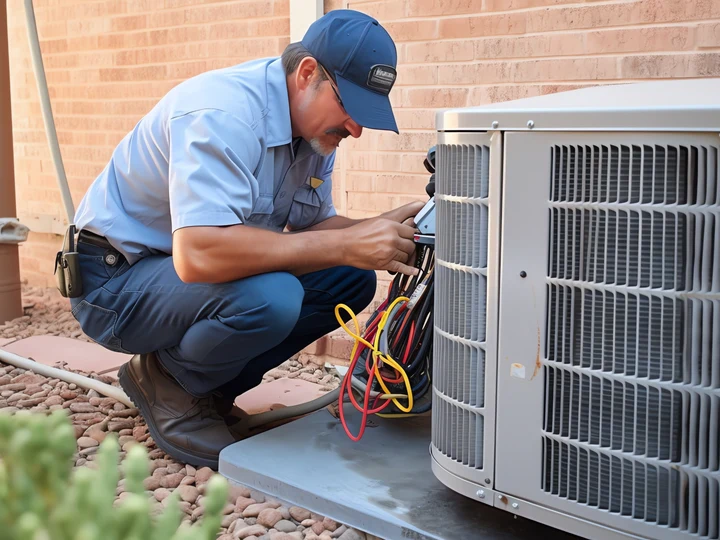
Our maintenance members enjoy priority scheduling, consistent system performance, and the confidence that comes from knowing a trained professional is keeping an eye on their equipment throughout the year.
What’s Included In Our Maintenance Plan?
We know that a new HVAC system or a major repair can be a significant investment. That is why Spencer Heating and Air works with trusted lending partners to make quality comfort accessible to every homeowner. We want you to make the best decision for your home — not the cheapest one because of budget pressure.
Why Consider Financing?

Hover over the section to see the full list. From testing and sealing to complete redesign, we provide every ductwork service your home needs.
Whether you're dealing with comfort problems, high energy bills, or planning new equipment installation, proper ductwork is essential for system performance. We assess, repair, seal, and optimize ductwork to improve efficiency, comfort, and air quality throughout your home.
Service: pressure testing, airflow measurement, leak detection. We quantify exactly how much air your ducts are losing and identify all performance problems before recommending solutions.
Service: mastic sealant application, connection tightening, leak repair. We seal all accessible leaks using materials that last, typically reducing energy waste by 10–20%.
Benefit: sealing leaks and gaps keeps dust, allergens, and attic or crawlspace air from being pulled into your ducts — so the air your system delivers stays cleaner throughout your home.
Service: complete ductwork design for new construction or equipment upgrades. Properly sized ducts matched to your equipment capacity for balanced airflow and optimal performance.
Service: damper adjustment, airflow measurement, system balancing. Ensures each room receives proportional air volume based on size and cooling/heating needs.
Service: insulation installation for ducts in unconditioned spaces, proper support to prevent sagging. Reduces energy loss and prevents ductwork damage over time.
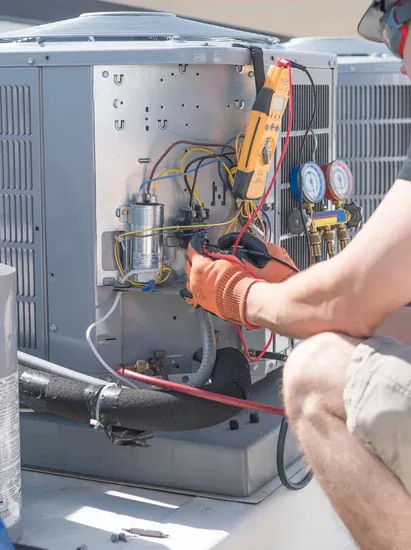
Varies widely. Most homes lose 15–30% of conditioned air through duct leaks. Some older or poorly installed systems lose 40%+ of their output. The only way to know is to test. A blower door or duct pressure test reveals total leakage. We measure the exact percentage so you understand the problem and the payback potential of repairs.
Depends on the amount and severity of leakage and how accessible the ductwork is — we provide an upfront quote after inspection. Because energy savings are typically 10–20% of heating/cooling costs, many homeowners recover their investment within 2–3 years through lower utility bills.
In most cases, sealing existing ducts is far more cost-effective than full replacement. We seal every accessible leak using mastic sealant or tape. Only severely damaged ducts (crushed flex ductwork, holes larger than a few inches, extensive corrosion) require replacement. Most ductwork problems are resolved by sealing existing ducts, not replacing them.
Simple accessible leaks at connections can sometimes be sealed with duct tape or mastic. However, professional sealing is much more comprehensive—we pressure test to find all leaks, seal them properly using materials that last (unlike duct tape, which degrades), and verify that improvements were achieved. DIY sealing typically addresses only obvious leaks, missing the majority.
Often significantly. If you have hot and cold spots, rooms that are hard to condition, or inconsistent comfort throughout the home, ductwork repair and balancing frequently resolves those problems. Especially for homes with disconnected ducts or severe leakage, improvements in room-to-room comfort can be dramatic.
Signs include slow airflow from vents, difficulty reaching set temperature, some rooms staying uncomfortable, and your system running constantly. Undersized ducts restrict airflow and force equipment to work harder. If your home was built with inadequate ductwork, or if you've upgraded to more powerful equipment, upsizing ducts might be necessary—though sealing existing ducts often improves performance first.
Yes. Ducts running through unconditioned spaces lose energy to the surrounding temperature. In summer, a cooling duct through a hot attic warms cooled air before it reaches your room. Insulation (typically R-8 or R-12 fiberglass wraps) prevents that energy loss and improves efficiency. Most building codes require duct insulation in unconditioned spaces.
Significantly, if you have substantial leakage. Sealing ducts that are losing 20–30% of airflow typically reduces heating and cooling costs by 10–20%. Lower bills are one benefit; improved comfort and equipment efficiency are others. Energy savings often exceed the cost of ductwork repairs within 2–4 years.
Spencer Heating and Air operates from two convenient locations to serve communities across East Alabama. Whether you live in the heart of Auburn or along the shores of Lake Martin, our team is never far away.
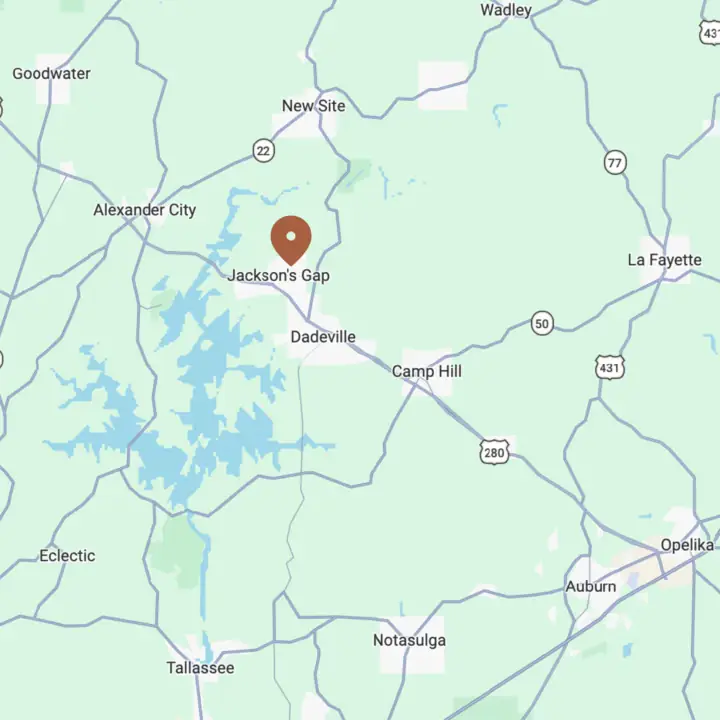
Our Auburn flagship has served Lee County since 1967, with the deepest tooling and parts inventory in the region. When you need our broadest expertise — the Auburn team is a short drive away.
Call Auburn Location 334-887-9020Auburn customers and Lake Martin neighbors get the same Spencer commitment to honest work, accurate diagnosis, and repairs that last.
Book Service at Auburn Location
For over 55 years, Spencer Heating and Air has set the standard for honest, expert HVAC service in the Lake Martin area and Auburn. Our customers keep coming back because they know they can count on us — for fair pricing, skilled workmanship, and the kind of genuine care that only comes from a family-owned business with deep roots in the community.
Whether you need a brand-new American Standard system, a quick repair, or a comprehensive maintenance plan, we are here and ready to help. Do not settle for anything less than the best — your home and your family deserve it.
Leaky, poorly designed, or contaminated ductwork undermines your HVAC system's performance and wastes energy. Spencer Heating and Air can test your ducts, identify problems, and provide solutions that improve comfort, efficiency, and air quality. Start with a ductwork assessment—we'll measure leakage, test airflow in each room, and show you exactly what needs improvement.